Last reviewed
Why these facts are different
Most lists of Chester facts are basic and repeat each other. These don't.
They come from a detailed research base of Chester history we keep for our guests, where every date is checked against the national Heritage Gateway records and the Victoria County History, the great county-by-county history of England begun in 1899.
History is full of intriguing stories, but some dates are genuinely uncertain. Where that happens we label them honestly rather than rounding them into neat numbers. Chester's buildings were founded, rebuilt and restored across centuries, and a single date rarely tells the whole story.
- Founded
- When an institution, settlement or earlier building began; not necessarily the fabric visible today.
- Earliest surviving fabric
- The oldest physical part the cited record says still remains.
- Current building completed
- When the structure visitors mainly see now was finished, even if it stands on an older site.
Chester is a fascinating mix of eras, characters and turning points, blended into the wonderful city it is today. We hope you enjoy its history as much as we do.

Roman Chester
AD 43 to around 410- The city walls began as Roman legionary defences in the AD 70s to 80s.
They were guarding Chester roughly a thousand years before the abbey that became the cathedral was founded.
Records: Victoria County History / British History Online - Chester has the largest Roman amphitheatre in Britain.
English Heritage records it as the largest. Built in the late first century, it had already been derelict, revived and abandoned again centuries before the cathedral's story began.
Records: English Heritage (largest in Britain), English Heritage (late first century AD) - Minerva's Shrine was carved into the living rock in the early 2nd century.
It is the only shrine of its kind in Britain still standing in its original spot, in Edgar's Field just over the river.
Records: Historic England (list text via britishlistedbuildings.co.uk mirror) - There is a shop on Bridge Street built over a Roman bath house.
No. 39 stands over part of a 2nd-century bath house, with an undercroft of around 1300 inside a Victorian building above. Three eras in one shop.
Records: Historic England (list text via britishlistedbuildings.co.uk mirror) - The racecourse sits on the Roman port.
A Roman quay wall, probably from the 2nd century, still edges the Roodee. Ships once moored where horses now run.
Records: Historic England (list text via britishlistedbuildings.co.uk mirror), Chester Race Company

Medieval Chester
Around 1066 to 1485- William I founded Chester Castle in 1070.
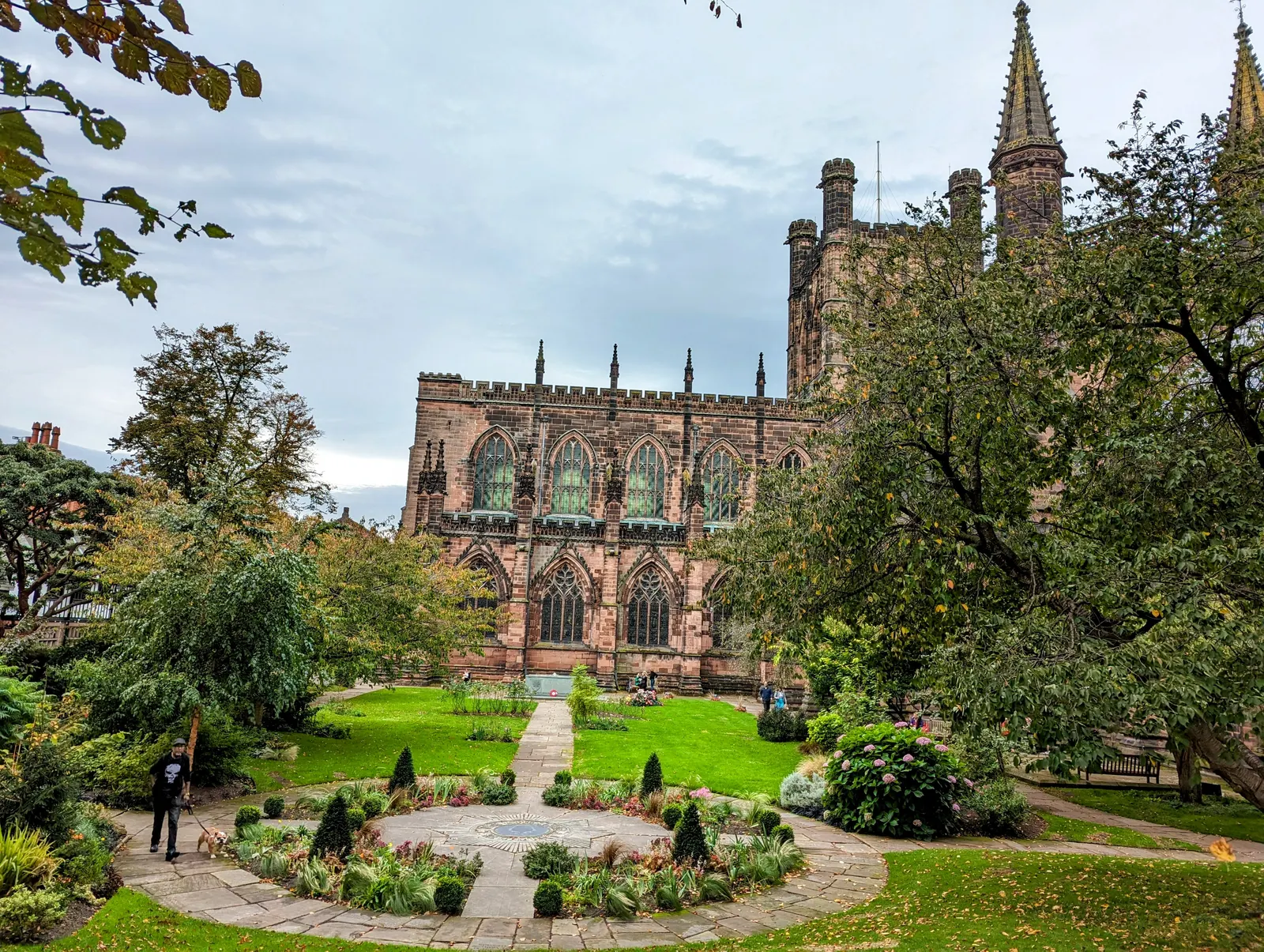
Earl Hugh refounded St Werburgh's as a Benedictine abbey just 22 years later, in 1092. That abbey became the cathedral.
Records: Victoria County History / British History Online, Victoria County History / British History Online, Victoria County History / British History Online - The monks built a weir across the Dee in 1093.
Hugh Lupus had it built to power the abbey's mills, and it is still shaping the river today.
Records: Historic England (via britishlistedbuildings.co.uk mirror), Victoria County History / British History Online - You can drink beside masonry older than most cathedral naves.
The cathedral's north transept of the 1090s is Chester's oldest standing church fabric, but the Falcon Inn runs it close, with stonework and roof timbers from around 1180.
Records: Victoria County History / British History Online, Victoria County History / British History Online, Historic England (list text via britishlistedbuildings.co.uk mirror) - The Old King's Head was built for a man called Peter the Clerk.
Its oldest fabric dates from around 1208, three minutes' walk from the Falcon's. Two pubs, both older than most English cathedrals' naves.
Records: Historic England (list text via britishlistedbuildings.co.uk mirror) - Three Old Arches is often called the oldest shopfront in England.
The stone Row frontage on Bridge Street dates from around 1200 and it is still a shop today.
Records: Historic England (list text via britishlistedbuildings.co.uk mirror) - One little gate in the walls is still locked every night.
The Kaleyard Gate was cut through the walls around 1275, by Edward I's permission, so the monks could reach their vegetable garden.
Records: Historic England (list text via britishlistedbuildings.co.uk mirror) - The Water Tower cost exactly £100 in 1322.
The city contracted mason John of Helpston to build it, making it one of the best-dated medieval buildings in Chester. It guarded a river that has since silted away.
Records: Victoria County History / British History Online - The Hermitage above The Groves housed formally inducted recluses.
Built in 1363, it was probably an anchorite's cell, home to someone who had chosen never to leave.
Records: Historic England (list text via britishlistedbuildings.co.uk mirror) - Richard II helped pay for the Old Dee Bridge.
The present bridge was funded by his Letters Patent of 1387, and the paperwork survives.
Records: The Gatehouse Gazetteer - The Blue Bell's timber houses went up in the mid-1400s.
They stood on Northgate Street some two centuries before Chester's last great timber town house was built.
Records: Historic England (list text via britishlistedbuildings.co.uk mirror) - Chester's first cathedral was St John's, not the one you see today.
Traditionally founded in 689, St John the Baptist's became the seat of the bishop in 1075 and held it until around 1100.
Records: Victoria County History / British History Online, Victoria County History / British History Online - St Peter's has stood at the Cross since at least the 1080s.
It appears in records by around 1080 as the established church of the market area, and it is still there at the centre of everything.
Records: Victoria County History / British History Online, Victoria County History / British History Online - The Rows were first recorded in 1293.
The oldest surviving arches, from the mid-13th century, are at 28 to 34 Watergate Street. Nobody has found another city that built its shops like this.
Records: Victoria County History / British History Online, Historic England (list text via britishlistedbuildings.co.uk mirror) - Ordinary-looking shops stand on medieval stone vaults.
Cowper House keeps a 13th-century vaulted undercroft, the Crypt Building and the Old Crypt sit on stonework of around 1300, and Leche House hides a 14th-century one.
Records: Historic England (list text via britishlistedbuildings.co.uk mirror), Historic England (list text via britishlistedbuildings.co.uk mirror), Historic England (list text via britishlistedbuildings.co.uk mirror), Historic England (list text via britishlistedbuildings.co.uk mirror) - Most of the wall towers are 13th-century.
King Charles Tower, Thimbleby's Tower, once called Wolf's Tower, and Barnaby's Tower all probably date from the 1200s.
Records: Historic England (list text via britishlistedbuildings.co.uk mirror), Victoria County History / British History Online, Historic England (list text via britishlistedbuildings.co.uk mirror), Historic England (list text via britishlistedbuildings.co.uk mirror)

Tudor and Stuart Chester
1485 to 1714- Stanley Palace was built in 1591, not 1597.
The official record corrects the often-repeated date. It was built for Sir Peter Warburton.
Records: Historic England (list text via britishlistedbuildings.co.uk mirror) - The Bear and Billet was one of the last great timber town houses raised in England.
The Earl of Shrewsbury built it in 1664, when brick was already taking over. Lady Mary Calveley's brick mansion of 1676, later the Oddfellows Hall, stands just up the same street.
Records: Historic England (list text via britishlistedbuildings.co.uk mirror), Historic England (list text via britishlistedbuildings.co.uk mirror) - The first recorded race on the Roodee was run on Shrove Tuesday 1539.
Mayor Henry Gee gave the meeting its documented start, which is why the racecourse can claim four and a half centuries of racing.
Records: Chester Race Company - Tudor House is probably not Tudor.
The Lower Bridge Street house likely dates from 1603, the year Elizabeth I died. The Boot Inn's upper storeys are mid-17th century, over an altered medieval undercroft.
Records: Historic England (list text via britishlistedbuildings.co.uk mirror), Historic England (list text via britishlistedbuildings.co.uk mirror) - The Civil War left its marks on the walls.
Morgan's Mount was a 1640s gun emplacement, and King Charles Tower needed repairs in 1658 after siege damage.
Records: Historic England (list text via britishlistedbuildings.co.uk mirror), Historic England (list text via britishlistedbuildings.co.uk mirror), Victoria County History / British History Online - Chester got its first church galleries in the 1630s.
St Peter's east end and south side were rebuilt between 1637 and 1640, bringing galleries to a Chester church for the first time.
Records: Victoria County History / British History Online, Victoria County History / British History Online

Georgian Chester
1714 to 1837- The Bluecoat School outside the Northgate was built in 1717.
Bishop Stratford founded the charity school in 1700; the building is a generation older than the bishops' own Old Palace on The Groves, finished in 1751.
Records: Historic England (list text via britishlistedbuildings.co.uk mirror), Historic England (list text via britishlistedbuildings.co.uk mirror) - All four main gates were rebuilt within about forty Georgian years.
The Eastgate came first in 1768 to 1769, paid for by Lord Grosvenor. Joseph Turner's Bridgegate followed in 1781 to 1782 and the Watergate in 1788, by which time the river port it once served had silted away.
Records: Historic England (list text via britishlistedbuildings.co.uk mirror), Victoria County History / British History Online - The Northgate of 1810 replaced a gate that doubled as the city gaol.
It was designed by the Greek Revival architect Thomas Harrison.
Records: Victoria County History / British History Online - The walls became a fashionable promenade in the early 1700s.
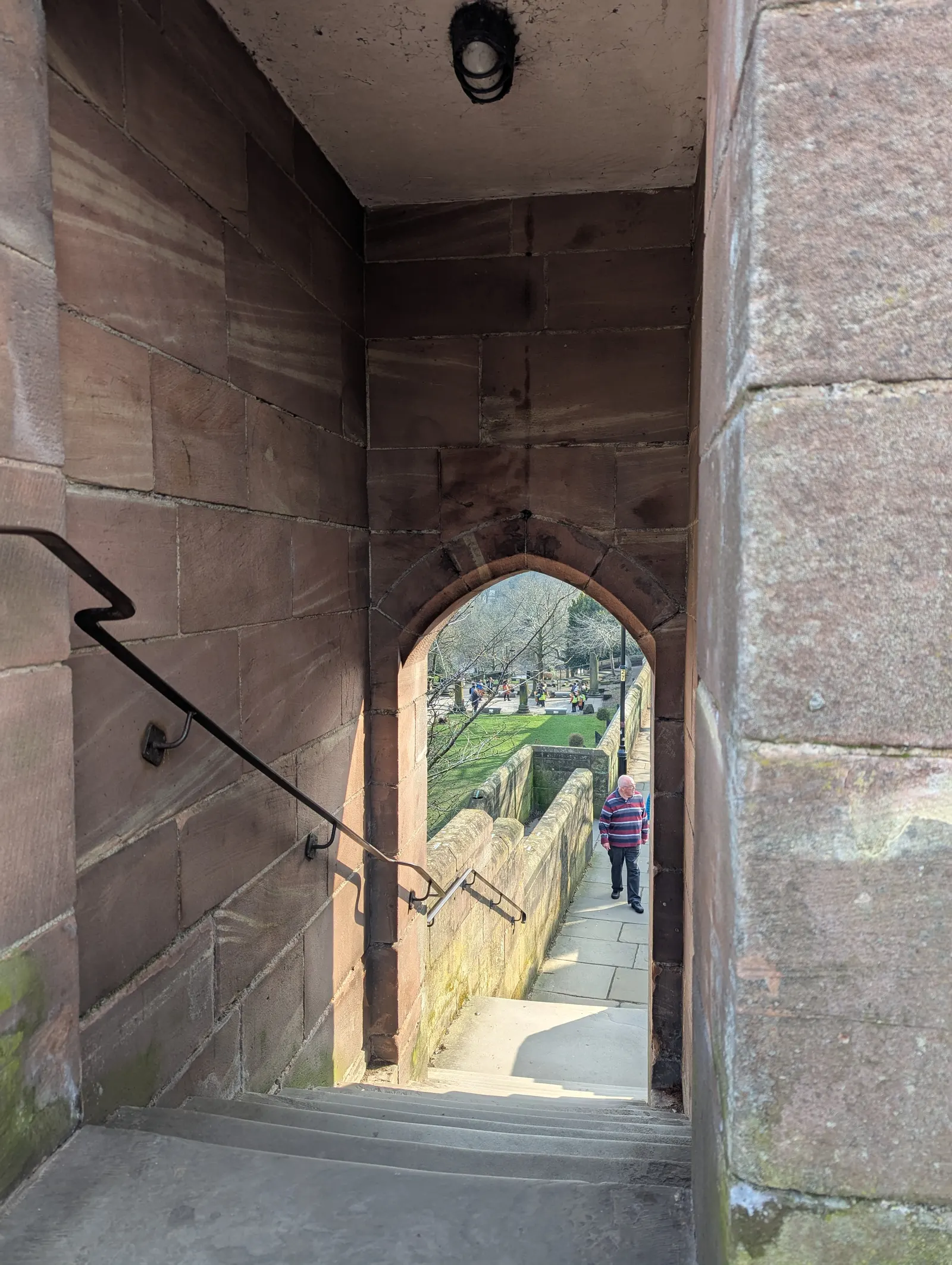
Between 1702 and 1708 the medieval drum tower by the Bridgegate was converted for the new walkway, and Pemberton's Parlour was built as a gazebo on the site of another. Walking the walls has been a pastime ever since.
Records: Historic England (list text via britishlistedbuildings.co.uk mirror), Historic England (list text via britishlistedbuildings.co.uk mirror) - Booth Mansion is a 1700 rebuild standing on 13th-century undercrofts.
From Row level up it is a grand town house of 1700; below, the medieval stonework carries on regardless.
Records: Historic England (list text via britishlistedbuildings.co.uk mirror)

Victorian Chester to today
1837 onwards- Chester's most photographed landmark is two buildings in one.
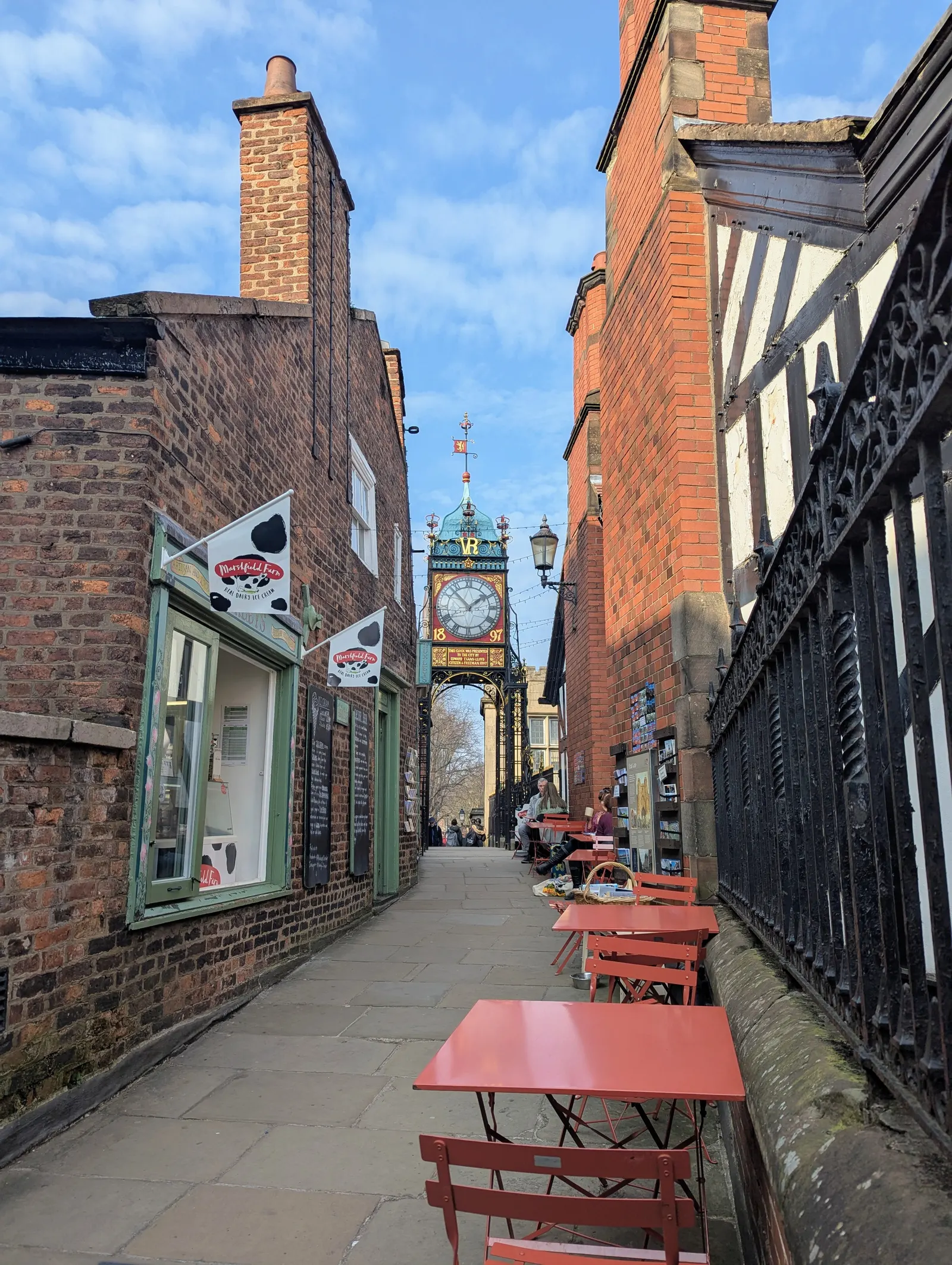
The Eastgate arch went up in 1768 to 1769, but John Douglas's wrought-iron clock only joined it in 1899, marking Queen Victoria's diamond jubilee. They are 130 years apart.
Records: Historic England (list text via britishlistedbuildings.co.uk mirror), Victoria County History / British History Online - Steele Street was laid out in the 1880s on the former Albion Hotel gardens.
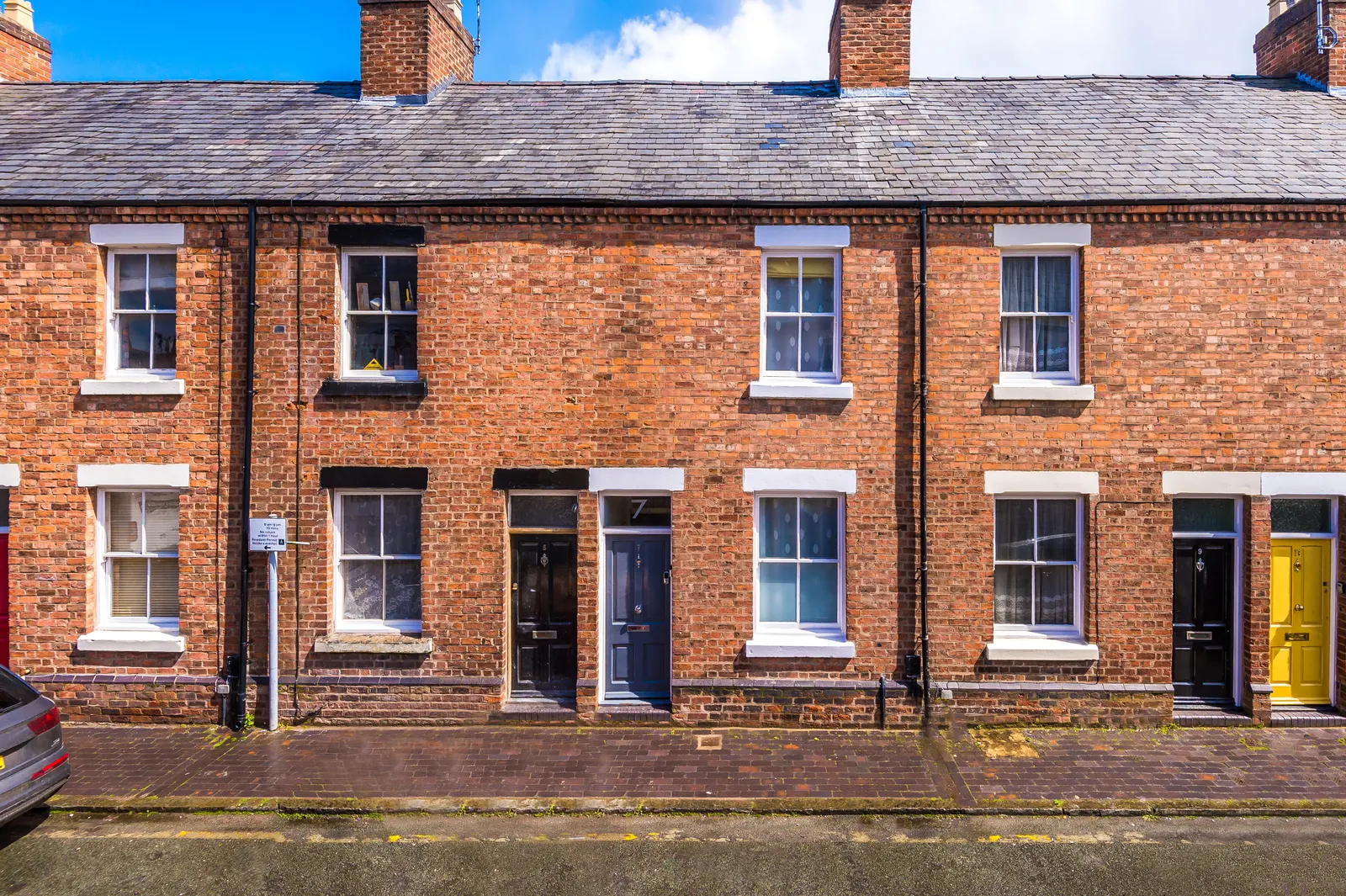
That is the quiet terrace where Enjoy the Pause stands, inside the Roman walls yet nearly 1,800 years younger than them.
Records: Cheshire West and Chester Council, Heritage Gateway (serving Historic England NHLE data), British History Online / Victoria County History, National Library of Scotland, National Library of Scotland - The medieval-looking Newgate opened in 1938.
Its twin towers were built to cope with motor traffic, making it the baby of Chester's wall gates.
Records: Victoria County History / British History Online - The Grosvenor Shopping Centre was one of the UK's first covered malls.
It opened in 1965, closer in age to the 1938 Newgate than most visitors would guess.
Records: Grosvenor (property group) - Storyhouse began life as a 1936 Odeon.
The cinema building was reborn as Chester's theatre, cinema and library in 2017. The new Chester Market opened in Exchange Square on 8 November 2022.
Records: Historic England (list text via britishlistedbuildings.co.uk mirror), Storyhouse, Cheshire West and Chester Council - The Grosvenor Bridge cost £50,000 and six years of work.
Thomas Harrison designed it in 1824 and it was built between 1827 and 1833, his great single arch over the Dee.
Records: Historic England (list text via britishlistedbuildings.co.uk mirror) - Queen's Park Suspension Bridge first crossed the Dee in 1852.
The elegant footbridge that lights up the river at night began as a Victorian original.
Records: Victoria County History / British History Online - The 1860s gave Chester a park, a Guildhall and a general on horseback.
Grosvenor Park was laid out from 1867 to 1874, Holy Trinity Church, now the Guildhall, went up from 1865 to 1869, and Viscount Combermere rode onto his plinth in 1865.
Records: Victoria County History / British History Online, Historic England (list text via britishlistedbuildings.co.uk mirror), Historic England (list text via britishlistedbuildings.co.uk mirror) - Bishop Lloyd's House owes its rich carving to a Victorian rescue.
The early-17th-century rebuild, over medieval undercrofts, was heavily restored in the 1890s by T. M. Lockwood, who also designed the Grosvenor Museum of 1885 to 1886.
Records: Historic England (list text via britishlistedbuildings.co.uk mirror)
From our front door
These distances are routed on foot from Enjoy the Pause on Steele Street, using OSRM over OpenStreetMap data, checked on 11 July 2026. Never as the crow flies.
- The Roman Gardens are barely two minutes' walk from the house.
You pass them before you have finished your coffee, and the cathedral is a still-gentle seven or eight minutes through the Rows.
Records: Historic England (list text via britishlistedbuildings.co.uk mirror), Victoria County History / British History Online, Victoria County History / British History Online - Both of Lower Bridge Street's great historic pubs are on the doorstep.
The 1664 Bear and Billet is about a four-minute walk, with the Falcon and its 850-year-old stonework two minutes further up the hill.
Records: Historic England (list text via britishlistedbuildings.co.uk mirror), Historic England (list text via britishlistedbuildings.co.uk mirror) - Nothing in the historic core is much beyond a quarter of an hour on foot.
The Newgate is three minutes away, the Eastgate Clock about five, and even the Watergate on the far, port-facing side of the old city is only about fifteen.
Records: Victoria County History / British History Online, Historic England (list text via britishlistedbuildings.co.uk mirror)
Think you would have guessed them?
The same records power our free Chester games. Ten quick questions, new every day: which is older, and which is the shorter walk from our door.
Play the Chester games